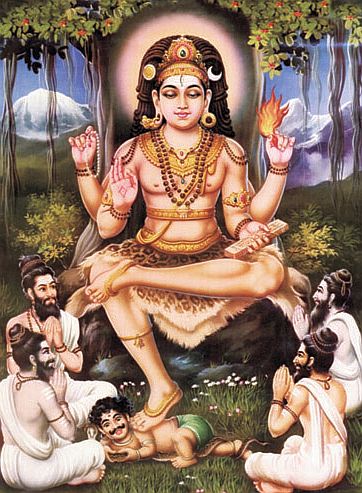
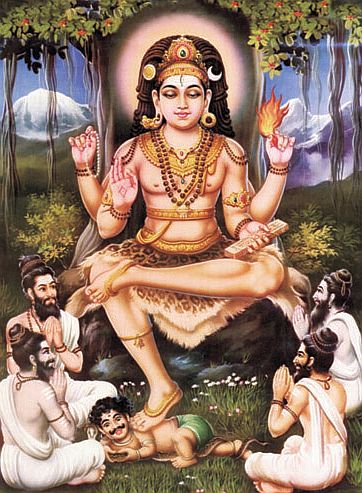
दक्षिणामूर्ति स्तोत्रम् is one of the most concentrated Advaita Vedanta hymns in the stotra tradition, composed by Adi Shankaracharya. It praises Shiva as दक्षिणामूर्ति, the south-facing guru who teaches the truth of Brahman through silence. The hymn is not merely devotional praise; it is a poetic map of the Upanishadic vision that the world appears through माया, while the Self is ever the one non-dual consciousness.
Adi Shankaracharya composed this stotram as a teaching-hymn, not merely as an emotional prayer. Its compact verses turn the guru icon of Dakshinamurti into a complete Advaita classroom: silence, चिन्मुद्रा, dream, mirror, deep sleep, and तत् त्वं असि all become teaching devices. The later मानसोल्लास commentary by Sureshvaracharya shows that the tradition received this hymn as a serious Vedantic text worthy of detailed study.
Its themes are built from Vedantic revelation: the guru as revealer of Brahman, तत् त्वं असि, the witness of waking, dream, and deep sleep, the unreality of mistaken identification, and the recognition of सर्वात्मत्व, the Self as all. The traditional मानसोल्लास commentary of Sureshvaracharya, a disciple in Shankara's lineage, shows how densely packed these verses are.
These concepts deepen the image of the silent teacher into a full Advaita method. मौन-व्याख्या is not absence of teaching, but the silence in which the prepared mind recognizes what words can only point toward. माया explains how the one consciousness seems to appear as a world of difference, while आत्म-ज्ञान removes mistaken identification with body and mind. ब्रह्म-जीव-ऐक्य and सर्वात्मत्व then show the culmination: the individual Self is not separate from Brahman, and all beings are recognized in the one Self.
शांतिपाठः
ॐ यो ब्रह्माणं विदधाति पूर्वं
यो वै वेदांश्च प्रहिणोति तस्मै ।
तं ह देवमात्मबुद्धिप्रकाशं
मुमुक्षुर्वै शरणमहं प्रपद्ये ॥
Word Meanings (पदार्थ):
शांतिपाठः - peace invocation
यः - who; the one who
ब्रह्माणम् - Brahma, the creator deity
विदधाति - contextual word sense: the one who first created or ordained Brahma
पूर्वम् - before (already)
यः - who; the one who
वै - indeed
वेदान् - contextual word sense: the one who indeed gave the Vedas to him
प्रहिणोति - contextual word sense: the one who indeed gave the Vedas to him
तस्मै - to him
तम् - him; that one
ह - indeed, certainly
देवम् - to the Lord
आत्म-बुद्धि-प्रकाशम् - who illumines knowledge of the Self
मुमुक्षुः - the seeker of liberation
शरणम् - refuge
अहम् - I
प्रपद्ये - I take refuge; I surrender
Translation (भावार्थ):
I, a seeker of liberation, take refuge in that radiant Lord who first ordained Brahma, who revealed the Vedas to him, and who illumines the understanding of the Self.
Commentary (अनुसंधान):
The opening words मुमुक्षुः and आत्म-बुद्धि-प्रकाशम् define the whole chant. This is not casual praise; it is the prayer of one who wants freedom from bondage. The Lord is invoked as the source of Vedic wisdom and as the inner light by which Self-knowledge becomes clear.
The mantra is drawn from the श्वेताश्वतर उपनिषद् tradition, where the excerpt यो ब्रह्माणं विदधाति पूर्वं यो वै वेदांश्च प्रहिणोति तस्मै presents the Lord as the source of Brahma and the Vedas. Shankara's teaching never separates scripture, guru, and inner illumination: श्रुति reveals, the guru unfolds, and the prepared mind recognizes.
In daily life, this prayer asks us to begin learning with humility. Real knowledge needs refuge in truth, not just cleverness. A person who sincerely wants freedom becomes willing to be corrected, refined, and illumined.
ध्यानम्
ॐ मौनव्याख्या प्रकटित परब्रह्मतत्त्वं युवानं
वर्षिष्ठांते वसदृषिगणैरावृतं ब्रह्मनिष्ठैः ।
आचार्येंद्रं करकलित चिन्मुद्रमानंदमूर्तिं
स्वात्मारामं मुदितवदनं दक्षिणामूर्तिमीडे ॥ 1 ॥
Word Meanings (पदार्थ):
ध्यानम् - meditation
मौन-व्याख्या-प्रकटित - revealed through silent teaching
परब्रह्म-तत्त्वम् - the truth of supreme Brahman
युवानम् - youthful
वर्षिष्ठ-अंतॆ-वसत्-ऋषि-गणैः - contextual word sense: surrounded by aged sages seated near him
आवृतम् - contextual word sense: surrounded by aged sages seated near him
ब्रह्म-निष्ठैः - established in Brahman
आचार्य-इंद्रम् - the foremost among teachers
चिन्-मुद्रम् - the gesture of consciousness
आनंद-मूर्तिम् - embodiment of bliss
स्वात्म-आरामम् - rejoicing in his own Self
दक्षिणामूर्तिम् - Dakshinamurti
ईडे - contextual word sense: I praise Dakshinamurti
Translation (भावार्थ):
I praise Dakshinamurti: the youthful supreme teacher who reveals the truth of Parabrahman through silence, surrounded by aged sages established in Brahman, showing the chinmudra, embodying bliss, rejoicing in the Self, and smiling with serene joy.
Commentary (अनुसंधान):
The paradox is central: the guru is युवानम्, youthful, while the disciples are ancient sages. मौन-व्याख्या means that the final truth is not produced by words; words remove error, and silence reveals what was already present. चिन्-मुद्रा symbolizes the union of individual consciousness with limitless consciousness.
The Upanishads often say Brahman is beyond speech and mind through phrases such as यतो वाचो निवर्तंते अप्राप्य मनसा सह, yet they use speech to guide the student. Sureshvaracharya's मानसोल्लास expands this very verse to show how silence is not absence of teaching but the fullness of direct knowledge. Shankara's method uses words until the student sees the wordless reality.
In daily life, this verse teaches quiet authority. The deepest teachers are not loud, insecure, or performative. A person rooted in truth can guide others through presence, clarity, and peace.
वटविटपिसमीपेभूमिभागे निषण्णं
सकलमुनिजनानां ज्ञानदातारमारात् ।
त्रिभुवनगुरुमीशं दक्षिणामूर्तिदेवं
जननमरणदुःखच्छेददक्षं नमामि ॥ 2 ॥
Word Meanings (पदार्थ):
वट-विटपि-समीपे - contextual word sense: seated on the ground near the banyan tree
भूमि-भागे - contextual word sense: seated on the ground near the banyan tree
निषण्णम् - contextual word sense: seated on the ground near the banyan tree
सकल-मुनि-जनानाम् - of sakala-muni-jan (plural)
ज्ञान-दातारम् - contextual word sense: giver of knowledge to all sages
आरात् - directly, nearby
त्रिभुवन-गुरुम् - teacher of the three worlds
ईशम् - the Lord
जनन-मरण-दुःख-च्छेद-दक्षम् - skilled in cutting the sorrow of birth and death
नमामि - I bow
Translation (भावार्थ):
I bow to Lord Dakshinamurti, seated near the banyan tree, the direct giver of knowledge to the sages, the guru of the three worlds, and the one who can cut the sorrow of birth and death.
Commentary (अनुसंधान):
The वट tree suggests depth, shade, longevity, and a living tradition. ज्ञान-दाता is not one who gives information; he reveals the knowledge that ends जनन-मरण-दुःख, the sorrow rooted in birth and death.
The Gita calls knowledge the purifier and praises the teacher-student approach of humility, questioning, and service. The Upanishads repeatedly show seekers approaching a guru for Self-knowledge. The Dakshinamurti image gathers that whole tradition into one silent scene.
In daily life, this verse teaches us to seek the right shelter. Under the shade of wisdom, life's heat becomes bearable. Good mentors, good scripture, and disciplined reflection protect a person from wasting life in repeated mistakes.
चित्रं वटतरोर्मूले वृद्धाः शिष्या गुरुर्युवा ।
गुरोस्तु मौनं व्याख्यानं शिष्यास्तुच्छिन्नसंशयाः ॥ 3 ॥
Word Meanings (पदार्थ):
चित्रम् - wonder, marvel
वट-तरोः - contextual word sense: at the root of the banyan tree
मूले - at the base
वृद्धाः - contextual word sense: aged disciples
शिष्याः - contextual word sense: aged disciples
गुरुः - teacher
युवा - a youth
गुरोः - contextual word sense: the guru's silence is the exposition
मौनम् - silence, restraint of speech
व्याख्यानम् - contextual word sense: the guru's silence is the exposition
शिष्याः - contextual word sense: the disciples' doubts are cut
चिन्न-संशयाः - contextual word sense: the disciples' doubts are cut
Translation (भावार्थ):
What a wonder: beneath the banyan tree the disciples are old and the guru is young. The guru's silence is the teaching, and the disciples' doubts are cut away.
Commentary (अनुसंधान):
The verse highlights मौनं व्याख्यानम्. Silence teaches when the mind has been prepared by scripture, reflection, and surrender. चिन्न-संशय means doubts are not suppressed; they are resolved at the root by direct recognition.
The Gita says knowledge cuts doubt like a sword: ज्ञानासिना आत्मनः संशयं छित्त्वा. Upanishadic teaching often culminates not in argument but in recognition. Shankara values reasoning, but only reasoning aligned with श्रुति and leading to direct understanding.
Practically, this verse reminds us that not every problem needs more noise. Some confusion clears when we become still enough to see. The best conversations, meetings, and decisions often need a moment of silence before action.
निधये सर्वविद्यानां भिषजे भवरोगिणाम् ।
गुरवे सर्वलोकानां दक्षिणामूर्तये नमः ॥ 4 ॥
Word Meanings (पदार्थ):
निधये - contextual word sense: to the treasure-house of all knowledge
सर्व-विद्यानाम् - of sarva-vidy (plural)
भिषजे - contextual word sense: to the physician for those diseased by worldly becoming
भव-रोगिणाम् - contextual word sense: to the physician for those diseased by worldly becoming
गुरवे - dative form, addressed in reverent offering or salutation
सर्व-लोकानाम् - of sarva-lOk (plural)
दक्षिणामूर्तये - to Dakshinamurti
नमः - salutations
Translation (भावार्थ):
Salutations to Dakshinamurti, the treasure of all knowledge, the physician for those afflicted by the disease of samsara, and the guru of all worlds.
Commentary (अनुसंधान):
Two words carry the verse: निधि, treasure, and भिषक्, physician. Ignorance is treated as भव-रोग, the disease of becoming, because it makes us repeatedly identify with the changing and suffer from it.
The Upanishads prescribe knowledge as the medicine for ignorance. Shankara often says that liberation comes from knowledge alone because the bondage is fundamentally error. Devotion to Dakshinamurti is therefore not escapism; it is receiving the cure for misidentification.
In daily life, this verse teaches a healthy approach to suffering. Some pain needs practical action; some pain needs emotional care; the deepest restlessness needs wisdom. A mature person learns which medicine fits which wound.
ॐ नमः प्रणवार्थाय शुद्धज्ञानैकमूर्तये ।
निर्मलाय प्रशांताय दक्षिणामूर्तये नमः ॥ 5 ॥
Word Meanings (पदार्थ):
ॐ - the sacred praNava, invoking the Supreme
नमः - salutations
प्रणव-अर्थाय - to the meaning of Om
शुद्ध-ज्ञान-ऎक-मूर्तये - to the one form of pure knowledge
निर्मलाय - stainless
प्रशांताय - deeply peaceful
दक्षिणामूर्तये - to Dakshinamurti
नमः - salutations
Translation (भावार्थ):
Om. Salutations to Dakshinamurti, the very meaning of Om, the single form of pure knowledge, stainless and supremely peaceful.
Commentary (अनुसंधान):
प्रणव-अर्थ means Dakshinamurti is not merely associated with ॐ; he is the reality indicated by it. शुद्ध-ज्ञान is pure consciousness, not accumulated information. प्रशांत is the peace that remains when false identification has quieted.
The मांडूक्य उपनिषद् is the main Upanishadic source for meditating on ॐ as Atman-Brahman. Shankara's commentary treats the silence beyond the syllabic parts as pointing to तुरीय, the non-dual reality. Dakshinamurti is praised here as that very truth.
In daily life, this verse helps distinguish data from wisdom. Information can make the mind busy; शुद्ध-ज्ञान makes it clear. The goal is not to know more for ego, but to become peaceful, clean, and useful.
चिद्धनाय महेशाय वटमूलनिवासिने ।
सच्चिदानंदरूपाय दक्षिणामूर्तये नमः ॥ 6 ॥
Word Meanings (पदार्थ):
चित्-धनाय - to the one rich in consciousness, the mass of awareness
महेशाय - to the great Lord
वट-मूल-निवासिने - to the one dwelling at the root of the banyan tree
सत्-चित्-आनंद-रूपाय - whose nature is existence, consciousness, and bliss
दक्षिणामूर्तये - to Dakshinamurti
नमः - salutations
Translation (भावार्थ):
Salutations to Dakshinamurti, the great Lord at the root of the banyan tree, the fullness of consciousness, whose nature is existence, consciousness, and bliss.
Commentary (अनुसंधान):
The verse uses the central Vedantic expression सत्-चित्-आनंद. सत् is unnegatable existence, चित् is self-revealing consciousness, and आनंद is fullness not dependent on objects. Dakshinamurti is the living icon of this truth.
The Taittiriya Upanishad speaks of Brahman as truth, knowledge, and infinitude, and unfolds bliss as the nature of the Self. Later Advaita language summarizes this as सत्-चित्-आनंद. Sureshvaracharya and Shankara's lineage use this language to point to reality, not to create a new concept.
Practically, this verse asks us to seek fullness in the right place. Objects can give comfort, but not lasting completeness. When a person learns to rest in awareness, external gains are enjoyed without desperation.
ईश्वरो गुरुरात्मेति मूर्तिभेदविभागिने ।
व्योमवद्व्याप्तदेहाय दक्षिणामूर्तये नमः ॥ 7 ॥
Word Meanings (पदार्थ):
ईश्वरः - the Lord
गुरुः - the teacher
आत्मा - the Self
इति - thus
मूर्ति-भेद-विभागिने - contextual word sense: appearing as these different forms
व्योम-वत्-व्याप्त-देहाय - whose body is all-pervasive like space
दक्षिणामूर्तये - to Dakshinamurti
नमः - salutations
Translation (भावार्थ):
Salutations to Dakshinamurti, who appears as Lord, guru, and Self in different forms, and whose body is all-pervasive like space.
Commentary (अनुसंधान):
This verse gives a key Advaita bridge: ईश्वर, गुरु, and आत्मा appear distinct for the seeker, yet they point to one reality. व्योम-वत्, like space, means unobstructed, all-pervasive, and untouched by the objects that appear within it.
The guru is revered because he or she functions as the manifest doorway to scripture and Self-knowledge. The Upanishads teach that Brahman is all-pervasive, while the Gita shows the Lord as immanent in all hearts. Shankara harmonizes these by distinguishing appearance from final identity.
In daily life, this verse helps us honor guidance without dependency. See the sacred in teacher, worship, and inner conscience. When these align, choices become clearer and ego becomes less noisy.
अंगुष्ठतर्जनी योगमुद्रा व्याजेनयोगिनाम् ।
शृत्यर्थं ब्रह्मजीवैक्यं दर्शयन्योगता शिवः ॥ 8 ॥
Word Meanings (पदार्थ):
अंगुष्ठ - thumb
तर्जनी - index finger
योग-मुद्रा-व्याजेन - by the sign of the yogic gesture
योगिनाम् - for yogins
शृति-अर्थम् - the meaning of the Vedas or Upanishads
ब्रह्म-जीव-ऐक्यम् - the identity of Brahman and the individual Self
दर्शयन् - showing
शिवः - Shiva
Translation (भावार्थ):
Through the gesture joining thumb and index finger, Shiva shows yogins the Upanishadic meaning: the identity of Brahman and the individual Self.
Commentary (अनुसंधान):
The चिन्-मुद्रा is an embodied teaching. The thumb is often interpreted as Brahman, the index finger as the individual ego, and their meeting as ब्रह्म-जीव-ऐक्य. The other fingers can symbolize limiting adjuncts that appear to separate the Self from Brahman.
The mahavakyas such as तत् त्वं असि and अहं ब्रह्मास्मि are the Upanishadic heart of this teaching. Shankara explains that identity is not between body-mind and cosmic creator as empirical entities, but between the pure consciousness indicated by both.
In daily life, this verse teaches that symbols should lead to transformation. A mudra, mantra, or ritual is fulfilled when it changes how we see ourselves and others. When the same consciousness is recognized in all, behavior becomes more respectful and less exploitative.
ॐ शांतिः शांतिः शांतिः ॥
Word Meanings (पदार्थ):
ॐ - the sacred pranava
शांतिः - peace, removal of obstacles
शांतिः - peace
Translation (भावार्थ):
Om. Peace, peace, peace. May obstacles be pacified and the mind become fit for knowledge.
Commentary (अनुसंधान):
The threefold शांतिः is traditionally recited to quiet obstacles from the environment, from other beings or cosmic forces, and from one's own body-mind. Before the main stotram begins, the seeker asks for a field where knowledge can settle.
Peace invocations are central to Upanishadic study. The Gita also presents a peaceful mind as the condition for steady knowledge: without inner quiet, there is no stable contemplation. Shankara repeatedly links शांति with preparedness for आत्म-ज्ञान.
In daily life, this is a reminder to prepare the ground before important work. A calm start, clear intention, and removal of avoidable disturbances can change the quality of an entire day.
स्तोत्रम्
विश्वं दर्पण-दृश्यमान-नगरी तुल्यं निजांतर्गतं
पश्यन्नात्मनि मायया बहिरिवोद्भूतं यथा निद्रया ।
यस्साक्षात्कुरुते प्रबोधसमये स्वात्मानमे वाद्वयं
तस्मै श्रीगुरुमूर्तये नम इदं श्री दक्षिणामूर्तये ॥ 1 ॥
Word Meanings (पदार्थ):
विश्वम् - the universe
दर्पण-दृश्यमान-नगरी-तुल्यम् - like a city seen in a mirror
निज-अंतर्गतम् - existing within oneself
आत्मनि - in the Self
पश्यन् - seeing
मायया - by illusion (maya)
बहिः - outside
इव - like; as
उद्भूतम् - contextual word sense: appearing as though outside through Maya
यथा - just as
निद्रया - contextual word sense: as in dream
प्रबोध-समये - at the time of awakening
स्वात्मानम् - contextual word sense: one's own Self alone as non-dual
ऎव - indeed
अद्वयम् - non-dual
साक्षात्-कुरुते - directly realizes
Translation (भावार्थ):
The universe is like a city seen in a mirror, existing within the Self yet appearing outside through Maya, just as in dream. At awakening, the seeker directly realizes the non-dual Self alone. Salutations to Sri Dakshinamurti, the guru-form.
Commentary (अनुसंधान):
The key images are दर्पण, mirror, and निद्र, dream. The world appears external, but the verse asks us to examine how all experience is known only in consciousness. अद्वय does not deny appearance; it denies a second independent reality apart from the Self.
The मांडूक्य उपनिषद् and its karika use dream analysis to loosen our certainty about waking experience. Shankara's Advaita uses this not to make life meaningless, but to reveal the Self as the unchanging witness of all states. Sureshvaracharya develops the mirror analogy to show dependence of appearance on consciousness.
In daily life, this verse gives perspective. Many anxieties become overwhelming because they are treated as absolute. Seeing experience as appearing in awareness creates space, helping one act responsibly without being swallowed by the scene.
बीजस्यांतरि-वांकुरो जगदितं प्राङ्निर्विकल्पं पुनः
मायाकल्पित देशकालकलना वैचित्र्यचित्रीकृतम् ।
मायावीव विजृंभयत्यपि महायोगीव यः स्वेच्छया
तस्मै श्रीगुरुमूर्तये नम इदं श्री दक्षिणामूर्तये ॥ 2 ॥
Word Meanings (पदार्थ):
बीजस्य - of bIj
अंतरि - contextual word sense: like a sprout latent within a seed
इव - like; as
अंकुरः - contextual word sense: like a sprout latent within a seed
जगत् - world, universe
इदम् - this
प्राक् - earlier; previously
निर्विकल्पम् - contextual word sense: this world was undifferentiated before manifestation
माया-कल्पित-देश-काल-कलना - divisions of space and time imagined by Maya
वैचित्र्य-चित्रीकृतम् - made into a picture of variety
मायावि - contextual word sense: like a magician
इव - like; as
महा-योगी - contextual word sense: like a great yogi
इव - like; as
यः - who; the one who
स्वेच्छया - contextual word sense: who manifests it by his own will
विजृंभयति - contextual word sense: who manifests it by his own will
Translation (भावार्थ):
Before manifestation, this world was undifferentiated like a sprout hidden in a seed. Through Maya, divisions of space and time appear as a vast picture of variety, manifested by the Lord as a magician or great yogi displays wonders by will. Salutations to Sri Dakshinamurti.
Commentary (अनुसंधान):
बीज and अंकुर show potential becoming manifest. देश, काल, and कलना indicate space, time, and division. The world-picture is not independent of consciousness; it is an ordered manifestation under माया.
The Taittiriya Upanishad says creation emerges from Brahman, is sustained by Brahman, and returns to Brahman. Advaita explains this through माया, not as a second absolute principle but as dependent appearance. Shankara's rope-snake style reasoning clarifies how appearance can function without being ultimately independent.
In daily life, this verse teaches humility about our mental constructions. We often mistake our categories, timelines, and labels for reality itself. Wisdom uses categories but does not become trapped by them.
यस्यैव स्फुरणं सदात्मकमसत्कल्पार्थकं भासते
साक्षात्तत्वमसीति वेदवचसा यो बोधयत्याश्रितान् ।
यस्साक्षात्करणाद्भवेन्न पुनरावृत्तिर्भवांभोनिधौ
तस्मै श्रीगुरुमूर्तये नम इदं श्री दक्षिणामूर्तये ॥ 3 ॥
Word Meanings (पदार्थ):
यस्य - whose
ऎव - indeed
स्फुरणम् - contextual word sense: whose very shining
सत्-आत्मकम् - of the nature of existence
असत्-कल्प-अर्थकम् - contextual word sense: makes the unreal-seeming world appear meaningful
भासते - appears
साक्षात् - directly; plainly; truly
तत् - that
त्वम् - you
असि - you are
इति - thus
वेद-वचसा - contextual word sense: directly through the Vedic statement "That thou art"
आश्रितान् - contextual word sense: teaches those who take refuge
बोधयति - contextual word sense: teaches those who take refuge
साक्षात्-करणात् - by direct realization
न - not
पुनर्-आवृत्तिः - contextual word sense: there is no return
भव-अंभोनिधौ - to the ocean of becoming
Translation (भावार्थ):
By his shining as existence, even the world of dependent appearance seems meaningful. Through the Vedic declaration तत् त्वं असि, he teaches those who seek refuge. By directly realizing that truth, there is no return to the ocean of samsara. Salutations to Sri Dakshinamurti.
Commentary (अनुसंधान):
The verse centers on तत् त्वं असि. The world appears because consciousness shines; the seeker is freed when the same consciousness is recognized as one's Self. भव-अंभोनिधि, the ocean of becoming, is crossed by knowledge, not by rearranging waves.
तत् त्वं असि from the छांदोग्य उपनिषद् is one of the great mahavakyas. Shankara explains that the identity is understood by removing contradictory adjuncts: the limitless indicated by तत् and the inner consciousness indicated by त्वम् are one.
In daily life, this verse gives a direction beyond endless self-improvement anxiety. Improve conduct, yes, but know the deeper goal: to discover the Self not dependent on praise, failure, status, or comparison.
नानाच्छिद्र घटोदर स्थित महादीप प्रभाभास्वरं
ज्ञानं यस्य तु चक्षुरादिकरण द्वारा बहिः स्पंदते ।
जानामीति तमेव भांतमनुभात्येतत्समस्तं जगत्
तस्मै श्री गुरुमूर्तये नम इदं श्री दक्षिणामूर्तये ॥ 4 ॥
Word Meanings (पदार्थ):
नाना-छिद्र-घट-उदर-स्थित-महा-दीप-प्रभा - like the light of a great lamp inside a pot with many holes
ज्ञानम् - knowledge
यस्य - whose
चक्षुः-आदि-करण-द्वारा - through the instruments such as the eyes
बहिः - outside
स्पंदते - contextual word sense: appears to move outward
जानामि - contextual word sense: "I know"
इति - thus
तम् - him; that one
ऎव - indeed
भांतम् - contextual word sense: by that alone shining
अनुभाति - contextual word sense: this entire world shines after it
एतत् - this
समस्तम् - contextual word sense: this entire world shines after it
जगत् - world, universe
Translation (भावार्थ):
Like a great lamp inside a pot with many holes, consciousness appears to shine outward through the eyes and other instruments. Because that alone shines, the whole world shines, and one says, "I know." Salutations to Sri Dakshinamurti.
Commentary (अनुसंधान):
The body is compared to a pot, the senses to holes, and consciousness to a lamp. Seeing seems to go outward, but the power of knowing belongs to consciousness. जानामि, "I know," is possible only because awareness is already present.
The कठ उपनिषद् says the Self is the light because of which sun, moon, fire, and all things shine. The Gita also says the light in all lights is beyond darkness. Shankara uses these teachings to show that consciousness is self-revealing and does not need another light.
In daily life, this verse helps train attention. Instead of being dragged entirely by objects, pause and notice the awareness in which objects are known. That shift can reduce impulsiveness and increase clarity.
देहं प्राणमपींद्रियाण्यपि चलां बुद्धिं च शून्यं विदुः
स्त्री बालांध जडोपमास्त्वहमिति भ्रांताभृशं वादिनः ।
मायाशक्ति विलासकल्पित महाव्यामोह संहारिणे
तस्मै श्री गुरुमूर्तये नम इदं श्री दक्षिणामूर्तये ॥ 5 ॥
Word Meanings (पदार्थ):
देहम् - body
प्राणम् - vital force
इंद्रियाणि - senses
चलाम् - contextual word sense: changing intellect
बुद्धिम् - contextual word sense: changing intellect
शून्यम् - void or nothingness
अहम् - I
इति - thus
भ्रांताः - contextual word sense: deluded ones saying "this is I"
माया-शक्ति-विलास-कल्पित-महा-व्यामोह - great delusion projected by the play of Maya
संहारिणे - to the destroyer
Translation (भावार्थ):
Some, deluded, declare the body, life-force, senses, changing intellect, or void to be the Self. Dakshinamurti destroys the great confusion projected by the play of Maya. Salutations to Sri Dakshinamurti.
Commentary (अनुसंधान):
The verse lists mistaken identities: देह, प्राण, इंद्रिय, बुद्धि, and शून्य. Each is known, changing, or conceptually grasped; therefore none can be the witnessing Self. The guru destroys व्यामोह, deep confusion, by discrimination.
The Gita's क्षेत्र-क्षेत्रज्ञ teaching distinguishes the field from the knower of the field. The Upanishads similarly reject body, breath, and mind as final identity. Shankara's commentaries are especially clear that the Self is not an object, not even a subtle or blank object.
In daily life, this verse prevents shallow self-definitions. "I am my body," "I am my productivity," "I am my mood," or "nothing matters" are all incomplete. Wisdom gives a stable center from which practical life can be handled sanely.
राहुग्रस्त दिवाकरेंदु सदृशो माया समाच्छादनात्
सन्मात्रः करणोप संहरणतो योऽभूत्सुषुप्तः पुमान् ।
प्रागस्वाप्समिति प्रबोधसमये यः प्रत्यभिज्ञायते
तस्मै श्री गुरुमूर्तये नम इदं श्री दक्षिणामूर्तये ॥ 6 ॥
Word Meanings (पदार्थ):
राहु-ग्रस्त-दिवाकर-इंदु-सदृशः - like the sun or moon eclipsed by Rahu
माया-समाच्छादनात् - because of being covered by Maya
सत्-मात्रः - mere existence, pure being
करण-उपसंहरणतः - due to withdrawal of the instruments
सुषुप्तः - contextual word sense: the person in deep sleep
पुमान् - person, man
प्राक् - earlier; previously
अस्वाप्सम् - contextual word sense: "I slept before"
इति - thus
प्रबोध-समये - at the time of awakening
प्रत्यभिज्ञायते - contextual word sense: is recognized at the time of waking
Translation (भावार्थ):
In deep sleep, when the instruments are withdrawn, the person remains as pure existence, covered by Maya like the sun or moon in eclipse. On waking, one recognizes, "I slept before." Salutations to Sri Dakshinamurti.
Commentary (अनुसंधान):
The verse uses deep sleep as evidence. In सुषुप्ति, senses and mind are withdrawn, yet on waking one says, प्राक् अस्वाप्सम्, "I slept." This memory indicates continuity of the witness, even when mental activity is absent.
The मांडूक्य उपनिषद् analyzes waking, dream, and deep sleep to reveal तुरीय. Shankara explains that deep sleep is not liberation because ignorance remains, but it helps show that the Self is not identical with active mind.
In daily life, this verse gives relief from mental overactivity. If awareness is deeper than thought, one need not obey every thought. Rest, silence, and reflection can become allies in seeing more clearly.
बाल्यादिष्वपि जाग्रदादिषु तथा सर्वास्ववस्थास्वपि
व्यावृत्ता स्वनु वर्तमान महमित्यंतः स्फुरंतं सदा ।
स्वात्मानं प्रकटीकरोति भजतां यो मुद्रया भद्रया
तस्मै श्री गुरुमूर्तये नम इदं श्री दक्षिणामूर्तये ॥ 7 ॥
Word Meanings (पदार्थ):
बाल्य-आदिषु - in childhood and later stages
जाग्रत्-आदिषु - in waking and other states
सर्वासु - contextual word sense: in all conditions
अवस्थासु - contextual word sense: in all conditions
व्यावृत्तासु - though changing or passing away
अनुवर्तमानम् - continuing
अहम् - I
इति - thus
अंतः - inside
स्फुरंतम् - contextual word sense: shining within as "I"
स्वात्मानम् - contextual word sense: reveals one's own Self
प्रकटीकारोति - contextual word sense: reveals one's own Self
भद्रया - contextual word sense: through the auspicious gesture
मुद्रया - contextual word sense: through the auspicious gesture
Translation (भावार्थ):
Through childhood and all later stages, through waking and all states, the changing conditions pass, yet the inner "I" continues to shine. Dakshinamurti reveals that Self to devotees through the auspicious mudra. Salutations to Sri Dakshinamurti.
Commentary (अनुसंधान):
The verse points to continuity through change. Childhood, youth, old age, waking, dream, and sleep differ greatly, yet the sense of अहम् persists. The inquiry is: what is that constant light behind changing conditions?
The Gita says the embodied one passes through childhood, youth, and old age, and likewise to another body; the wise are not deluded. The Upanishads identify the continuing witness as Atman. Shankara treats recognition of this witness as a doorway to non-dual knowledge.
In daily life, this verse gives balance through life stages. Success, aging, loss, and change do not erase the inner light. Remembering this helps a person meet change with dignity rather than desperation.
विश्वं पश्यति कार्यकारणतया स्वस्वामिसंबंधतः
शिष्यचार्यतया तथैव पितृ पुत्राद्यात्मना भेदतः ।
स्वप्ने जाग्रति वा य एष पुरुषो माया परिभ्रामितः
तस्मै श्री गुरुमूर्तये नम इदं श्री दक्षिणामूर्तये ॥ 8 ॥
Word Meanings (पदार्थ):
विश्वम् - the universe; all
पश्यति - sees, perceives
कार्य-कारणतया - as cause and effect
स्व-स्वामि-संबंधतः - as possession and owner
शिष्य-आचार्यतया - as student and teacher
पितृ-पुत्र-आदि-आत्मना - as father, son, and other identities
भेदतः - through difference
स्वप्ने - contextual word sense: in dream or waking
जाग्रति - are awake
वा - or
माया-परिभ्रामितः - made to wander by Maya
Translation (भावार्थ):
Deluded by Maya, the person sees the world through distinctions of cause and effect, owner and owned, teacher and student, father and son, and many other differences, whether in dream or waking. Salutations to Sri Dakshinamurti.
Commentary (अनुसंधान):
The verse does not deny functional relationships; it exposes bondage to भेद, divisive perception. Cause-effect, possession, teacher-student, and family roles are useful in व्यवहार, but they become binding when taken as ultimate.
The Brihadaranyaka Upanishad says that where there is duality, one sees another; where all is the Self, what should one see and through what? Shankara uses this to distinguish practical plurality from final non-duality. Sureshvaracharya's tradition emphasizes that knowledge frees the mind from being fooled by relational appearances.
In daily life, this verse helps us play roles without being trapped by them. Be a parent, student, leader, worker, or owner responsibly, but remember that roles are not the whole truth. This reduces pride, fear, and conflict.
भूरंभांस्यनलोऽनिलोंबर महर्नाथो हिमांशुः पुमान्
इत्याभाति चराचरात्मकमिदं यस्यैव मूर्त्यष्टकम् ।
नान्यत्किंचन विद्यते विमृशतां यस्मात्परस्माद्विभो
तस्मै श्री गुरुमूर्तये नम इदं श्री दक्षिणामूर्तये ॥ 9 ॥
Word Meanings (पदार्थ):
भूः - earth
अंभांसि - waters
अनलः - fire
अनिलः - air
अंबर - space
अहर्-नाथः - sun
हिमांशुः - moon
पुमान् - conscious being or individual
मूर्ति-अष्टकम् - eightfold form
चर-अचर-आत्मकम् - contextual word sense: this moving and unmoving universe
इदम् - this
न - not
अन्यत् - other
किंचन - contextual word sense: nothing else exists
विद्यते - is found; exists
परस्मात् - contextual word sense: apart from the supreme all-pervading one
विभोः - contextual word sense: apart from the supreme all-pervading one
Translation (भावार्थ):
Earth, water, fire, air, space, sun, moon, and the conscious being shine as the eightfold form of that all-pervading Lord. For those who inquire, nothing exists apart from the supreme one. Salutations to Sri Dakshinamurti.
Commentary (अनुसंधान):
The verse gives मूर्ति-अष्टक, the eightfold form: five elements, sun, moon, and conscious being. It moves from world-analysis to all-inclusiveness. Nothing is outside the Lord because all names and forms depend on the one reality.
The Gita describes the Lord's lower nature as earth, water, fire, air, space, mind, intellect, and ego, and then points to a higher conscious principle. The Upanishads declare that all this is Brahman. Advaita reads such passages as showing dependence of the entire cosmos on consciousness.
In daily life, this verse creates ecological and social reverence. Earth, water, light, breath, and living beings are not disposable objects. Seeing the world as sacred encourages restraint, gratitude, and responsible action.
सर्वात्मत्वमिति स्फुटीकृतमिदं यस्मादमुष्मिन् स्तवे
तेनास्व श्रवणात्तदर्थ मननाद्ध्यानाच्च संकीर्तनात् ।
सर्वात्मत्व महाविभूतिसहितं स्यादीश्वरत्वं स्वतः
सिद्ध्येत्तत्पुनरष्टधा परिणतं चैश्वर्य-मव्याहतम् ॥ 10 ॥
Word Meanings (पदार्थ):
सर्वात्मत्वम् - the Selfhood of all
स्फुटीकृतम् - made clear
अस्मिन् - in this
स्तवे - contextual word sense: in this hymn
श्रवणात् - by listening
तद्-अर्थ-मननात् - by reflection on its meaning
ध्यानात् - by meditation
संकीर्तनात् - by chanting
सर्वात्मत्व-महा-विभूति-सहितम् - endowed with the great glory of seeing all as the Self
ईश्वरत्वम् - contextual word sense: lordliness arises naturally
स्वतः - a poetic or tantric phrase in praise of the Divine Mother's beauty, power, or grace
स्यात् - would be
अष्टधा - contextual word sense: eightfold powers or sovereignty
परिणतम् - contextual word sense: eightfold powers or sovereignty
ऐश्वर्यम् - contextual word sense: eightfold powers or sovereignty
अव्याहतम् - unobstructed
Translation (भावार्थ):
Since this hymn clearly teaches that the Self is all, through listening to it, reflecting on its meaning, meditating upon it, and chanting it, one naturally gains the great glory of all-Selfhood and unobstructed divine mastery, traditionally described as eightfold.
Commentary (अनुसंधान):
The final teaching is सर्वात्मत्व. The verse also gives the practice sequence: श्रवण, मनन, ध्यान, and संकीर्तन. It is not enough to admire the hymn; one must hear, understand, contemplate, and internalize its meaning.
Advaita sadhana classically emphasizes श्रवण, मनन, and निदिध्यासन. Shankara treats these as the direct means for knowledge when the mind is prepared. The promised ऐश्वर्य can be read externally as yogic powers, but more deeply as mastery born from freedom from narrow identity.
In daily life, सर्वात्मत्व becomes ethical strength. If all are not separate from the Self, exploitation becomes irrational and compassion becomes natural. A person who practices this vision becomes less petty, more courageous, and more capable of serving the world.
॥ इति श्रीमच्छंकराचार्यविरचितं दक्षिणामूर्तिस्तोत्रं संपूर्णम् ॥
Word Meanings (पदार्थ):
इति - thus
श्रीमत्-शंकराचार्य-विरचितम् - composed by the revered Shankaracharya
दक्षिणामूर्ति-स्तोत्रम् - the hymn to Dakshinamurti
संपूर्णम् - complete
Translation (भावार्थ):
Thus the Dakshinamurti Stotram, composed by the revered Shankaracharya, is complete.
Commentary (अनुसंधान):
The closing line names the text and lineage. शंकराचार्य is remembered not merely as a poet but as a teacher who unfolded the Upanishadic vision with precision and compassion. संपूर्णम् marks textual completion and invites inner assimilation.
In Advaita, reverence for the author is reverence for the teaching tradition, संप्रदाय. The teaching does not depend on personality worship; it depends on a reliable transmission of श्रुति, reasoning, and direct recognition.
In daily life, completion should lead to integration. After chanting or study, ask: what doubt was clarified, what ego-pattern softened, and what action should become cleaner now? That turns recitation into transformation.
Browse Related Categories: